Marketing campaigns involve a lot of moving pieces — strategy, content, channels, creative, reporting – and it’s easy to skip a critical step without realizing it until results come in soft.
Use this checklist as a quick-reference companion to our full guides on planning and launching a marketing campaign, writing a campaign brief, and building a content marketing plan – pull it up before kickoff, and again before launch, to make sure nothing slips through.
Before You Start: Strategy & Brief
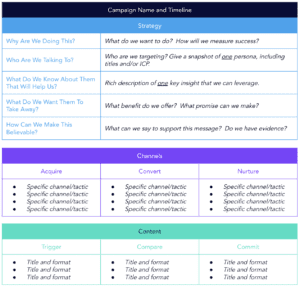
Every weak campaign traces back to a weak brief. Before any content gets written or channel gets booked, nail down what you’re actually trying to achieve and who you’re trying to reach — skipping this step is the single most common reason campaigns end up unfocused.
- Defined a single, specific measurable goal for this campaign (not multiple competing goals)
- Identified one specific persona: resisted the urge to make the campaign appeal to “everyone”
- Written a campaign brief covering: why we’re doing this, who we’re talking to, what we’re promising, and why it’s believable
- Reviewed the brief with the full team touching the campaign (design, copy, email, social, MOPs)
- Confirmed this campaign doesn’t duplicate messaging or timing with another active campaign
Channel Audit
Don’t add a new channel to a campaign until you know how your existing ones are actually performing. A quick audit here often reveals easy wins – underused channels with real potential, or dead weight you can cut and redirect budget from.
Your data doesn’t need to be perfect to be useful here. If your reporting is messy or incomplete, don’t let that stop the audit – look for leading indicators and directional trends (which channels get mentioned in deals, which content keeps getting shared, where engagement is climbing or dropping) instead of waiting for airtight numbers.
- Reviewed which channels are currently active and what they’re spending/performing
- Identified channels with no coverage that this campaign could fill
- Flagged any underperforming channels or campaigns to pause or cut, freeing up budget
- Confirmed attribution/reporting is in place to actually measure channel performance – if not, this is a prerequisite, not a nice-to-have
Content Gathering
Resist the urge to wait on brand-new content before you can launch. Most successful campaigns run on a handful of core assets, repackaged into multiple formats across multiple channels – not a stack of net-new white papers that take months to produce.
- Identified the handful of core content assets this campaign actually needs (not a wishlist of new guides)
- Mapped content to each stage of the buyer’s journey – top, middle, and bottom of funnel
- Planned how existing content will be repackaged (blog series, social stat images, nurture emails, podcast recap) instead of starting from scratch
- Built or updated the form, landing page, and thank-you page (with a secondary CTA)
- Confirmed all content has a clear, singular CTA tied back to the campaign’s one goal
>>Related: How to Build a Content Marketing Campaign Plan<<
Pre-Launch Checks
This is the stage most teams rush – small oversights here, like missing tracking or an unbriefed partner, turn into reporting gaps you won’t catch until it’s too late to fix cheaply.
- Cross-linked new content from relevant existing blog posts
- Loaded campaign messaging into sales/BDR templates and cadences (e.g., SalesLoft, Outreach, HubSpot Sequences)
- Added the offer into relevant nurture and newsletter email sequences
- Confirmed tracking (UTM parameters, campaign source fields) is set up before the first send or ad goes live – not after
- Briefed anyone external (agencies, freelancers, external guest speakers) with the campaign brief, not just a content brief
Launch & Distribution
Launch day should feel anticlimactic if the prep work above was done right. Yes, I said anticlimactic – everything scheduled, everyone briefed, nothing left to assemble at the last minute.
- Published and promoted core content across owned channels (blog, email, social, internal)
- Scheduled paid distribution or content syndication, if part of the plan
- Set a live date/time for any webinar, with invites and reminder emails scheduled
- Confirmed internal stakeholders (sales, leadership) know the campaign is live and what to expect
After Launch
The campaign doesn’t end at launch — the highest-ROI work often happens after, repurposing what performed and learning what to do differently next time.
- Repurposed the core asset into at least one additional format (blog recap, teaser video, social series) within the first few weeks
- Reviewed Campaign Source and Campaign Influence reports against the original goal
- Documented what worked and what didn’t, before starting the next campaign brief
Final Tip
If this list feels like a lot, it’s meant to be skimmed, not white-knuckled through in order. Pin it next to your campaign brief and check off what applies – the goal isn’t perfection, it’s making sure nothing critical gets missed between “great idea” and “live campaign.”
FAQ
What should be included in a marketing campaign checklist?
>>>>>>>>>>>A complete marketing campaign checklist should cover strategy and brief development, channel audit, content gathering, pre-launch technical setup (like tracking), launch/distribution steps, and post-launch reporting.
How is a campaign checklist different from a campaign brief?
A campaign brief defines the strategy — the goal, persona, promise, and proof. A marketing campaign checklist is the tactical execution list that ensures every step of bringing that strategy to life actually gets done.
How many channels should a single campaign use?
>>>>>>>>>>>It depends on your resources and goals, but most effective campaigns focus on a few well-executed channels rather than spreading thin across every option. Use a channel audit to identify where you already have traction before adding new channels.
What’s the biggest mistake teams make when launching a campaign?
Skipping tracking setup before launch. Without UTM parameters and campaign source fields in place from day one, it’s nearly impossible to accurately report on performance after the fact.